

I recently read the following from a teacher in a leadership position at a school: “In this week’s PSHE class, the students have been exploring how being a boy or a girl doesn’t have to determine your interests, personality traits, or hobbies.” Now, a child showing interest in the same sex is undoubtedly something that the education system should consider to ensure the integration, respect, and normalization of such behaviour. However, being a “boy or a girl” DOES determine many personality traits, interests, and hobbies, and it is precisely for this reason that internal conflict and doubt arise in those who feel differently. What should NOT determine are reactions, behaviours, and relationships with peers. The pursuit of “indoctrination” around the goal of changing nature, instead of integrating everyone into diversity, raises concerns about the true objectives surrounding the principles that, by definition, are essential: diversity and equality. Even more so when it arises from the needs of the political sector rather than the people —just look at the growing presence of political leaders at civil society demonstrations- doubts arise regarding the true interests behind this apparent clash of wills. It’s not about being liberal, Catholic, or conservative, which is simply another way of seeing the world. Nor does being progressive, agnostic, or anti-capitalist necessarily mean representing the interests and concerns of the majority; rather, it is an ideology that, to make matters worse, is led and implemented by politicians, with their respective donors and lobbyists behind them.
Being a man or a woman inherently possesses unique traits that determine specific behaviors and differentiate us from the other sex. This, in turn, grants us the capacity to relate to others from a wonderful and vibrant perspective, which has historically given the world two entirely distinct visions, allowing men and women to dance to the same tune, even though they perceive different sounds. It is precisely the appreciation of these differences that allows us to build respectful relationships and gives meaning to any policy aimed at greater protection and inclusion of everyone in society. Different genders are just one part of diversity and require an approach tailored to local realities. I am convinced that global guidelines cannot be established without falling into inequity. It is precisely this that constitutes democratic equality, guided by stakeholders, their cultures, religions, and traditions, not by a pre-established vision of “what should be.”
Even so, I firmly support any international initiative to promote peace and peaceful coexistence, something that, judging by the facts, is not being achieved, despite the extremely triumphalist rhetoric that ultimately proves opportunistic, as it only leads to confrontation. It’s not working, so other approaches, tailored to current circumstances and driven by the people, must be adopted.
It’s curious to see how “respect, justice, and freedom,” “inclusive policies,” and the “pursuit of more just societies” are presented as novel activities specific to this and the coming decades, as if discrimination, abuse, or bullying weren’t something that has been addressed—though not always in writing—by every educational institution for decades, and as if these cases weren’t consciously sought out and tailored solutions weren’t found. As it’s currently framed, it would seem that families from the 70s or 80s were seen as the epitome of bullying, responding with explicit aggression and legal backing to anyone expressing same-sex interest. The reality, however, is that so-called “good manners” and “good families” were based precisely on respect, coexistence, and tolerance, albeit with cultural beliefs specific to that era, which were peacefully accepted in one way or another. Undoubtedly, without the current oversight and monitoring—welcome if it fosters greater integration and well-being—mannerism and peaceful behaviour should be the cornerstone, rather than an aggressive barrage under the guise of “defending” others. It’s important to emphasize that we can learn from the past and adapt it to the present without falling into the trap of “building new standards”. Actually, they aren’t truly standards and fail to achieve the goal of creating harmony and better coexistence.
Morality wasn’t created by equality policies, although action protocols and a higher level of awareness regarding the transgressions that can be committed through comments, attitudes, or simply a lack of sensitivity to how others perceive them have been. However, a very positive evolution, when taken to the extreme of hysteria, produces the opposite effect: a rejection of the authoritarian and moralistic tone it entails. We are witnessing this: the growing aggression surrounding strong actions that fail to foster a more nuanced conscience, hindering a natural transition toward a society that guarantees rights.
No, a “new morality” isn’t being invented because it already exists in all those who uphold values within their families, communities, and/or religious beliefs.
Women and men are equal—or should be—in rights and opportunities, not necessarily in preferences, personality traits, or interests. Sex does determine interests and character, but that shouldn’t be an obstacle to freedom. What we should focus on is respecting diversity and creating solid legal frameworks that support fair measures to preserve these differences and particularities. NO, let’s not get lost in a fog where the individual is crushed by the supposed ambition of creating other genders and promoting them like trendy marketing products.
It’s not a matter of equality, but of equity; it’s not a gender issue, but exclusively a women’s issue, in which diversity—which is another matter—matters… a lot, but it’s a separate chapter.
Protecting women requires very specific measures aimed at their particular needs, and it’s not enough for them to be equal to men. (Equal pay is a truly relevant element to be fixed; however, it must also be adjusted to these needs.)
For example, security measures aimed at violence against trans people, gay people, etc. They require a deployment of specialized actions that should not be part of a “package of measures” but rather require specific attention to be truly effective and sustainable in the long term. A genuine deployment of measures tailored to their vulnerabilities is needed, and these measures cannot be equated solely in terms of equality.
The data sheds light on this: according to the GEM (Gender Entrepreneurship Monitor), two-thirds of formal investment is directed toward men. 47% of women, compared to men, close their businesses for personal or family reasons (caregiving, household responsibilities). This clearly demonstrates that women prioritize other interests and that the system is not prepared for this. Once again, equity prevails over a supposed equality that does not respond to the real—though political—interests of women.
One of the underlying reasons for fostering a debate around “gender diversity” is to achieve the ambitious—and I would say bizarre—goal of granting robots the status of “human” with a valid identity document!
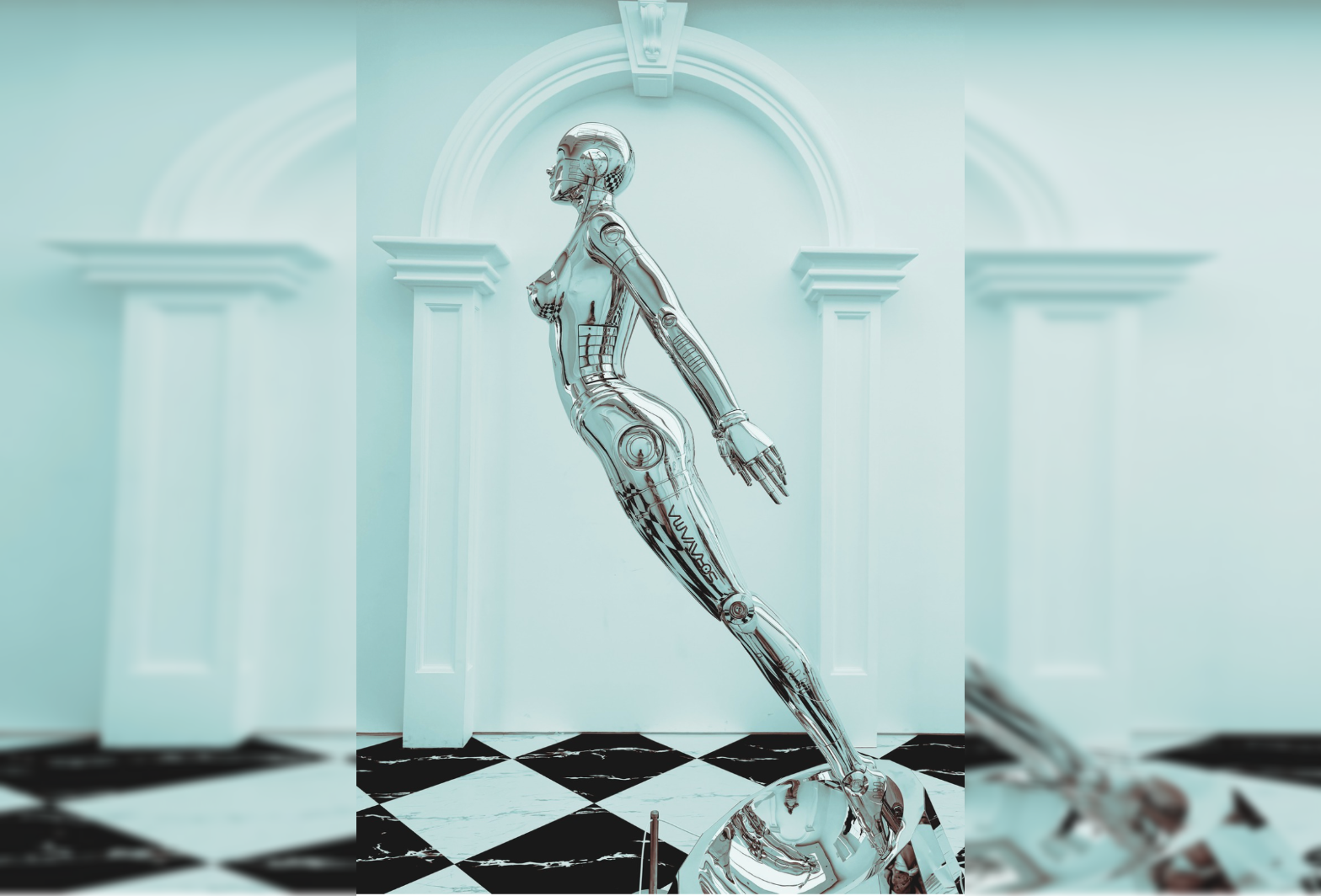
Indeed, in 2016, with the official presentation of the robot Sophia* and its subsequent granting of citizenship in 2017 by Saudi Arabia, we saw how so-called “gender equality” can become much more than the pursuit of gender balance or the romantic exercise of “embracing” diversity in all its dimensions; it can become a real cause for alarm. Undoubtedly, it is a true red line that we should not cross, one that seeks to equate robots and humans, not to assist us, but—in many cases—to manipulate the population and create “beings” that receive orders from one interest or another. This leaves the population in a position of inferiority in the face of a true human replacement controlled by a select few.
Is this a new concept of gender? A humanoid or robot with a greater capacity to store information and respond using AI algorithms than the average human. For what purpose? Who controls it? With what objectives? To this day, we cannot answer these simple questions, which should be fundamental in a democracy striving for global reach in terms of monitoring and controlling the morality of its citizens.
But let’s see who “Sophia” is… Sophia has 60 different facial expressions and skin made of a material called “flubber” to achieve realistic facial expressions. However, if the idea is to facilitate work and improve the lives of its citizens, it’s clear that a simple monitor would suffice. The resemblance to a human, the intention to grant it equal rights, with the legal concession of citizenship—which, although without legal effect to date—is an agenda that is very much on the table. Do we need “science fiction”-type relationships? Do we need the “robot” genre? It is here that we see the supposedly “visionary but visionless” agenda of a powerful group that directly benefits from the tarnished principle of gender equality. To the point that the boundary is no longer just women and men, but a whole new dimension of diversity and inclusivity, to which we now add the emerging future of a new gender: the humanoid. This has nothing to do with the original idea of SDG 5, which, in its long list of targets, includes “promoting the use of technology to empower women.” In light of these technological “advances,” it becomes naive and almost ironic. Is “empowerment” the main objective? The idea of robots replacing women in the workplace has a negative impact on their integration. In fact, we already have data on this, according to the International Labour Organization.
“These risks are closely linked to occupational segregation. Women are largely concentrated in administrative and business support roles, such as secretaries, receptionists, payroll staff, and accounting assistants, where many tasks are routine and codifiable, and therefore more at risk of being replaced by generative AI.” “At the national level, women are more exposed to generative AI than men in 88% of the countries analysed.” “In high-income countries as a whole, 41% of jobs are exposed to generative AI, compared to only 11% in low-income countries.”
In conclusion, AI is not only risky for women, but it is also a reason for their exclusion from the labour market. Therefore, gender equality must be addressed by considering these kinds of devastating effects. Gender diversity thus becomes uncomfortable and controversial when viewed in light of human-robot equality.
It is ambitious to strive for equality based on tailor-made adjustments for each woman and social, religious, and cultural context, and it is terribly ironic that a tool supposedly created as a technological assistant is becoming yet another gender. It is even more ironic to expect all of this to be managed by the public sector amidst a crisis of corruption, vested interests, powerful lobbies, and a global power struggle waged through wars.
Even so, the “promotion” and “advertising” of one gender or another is the easy, media-driven, and socially accepted approach, when the reality is that facilitating coexistence doesn’t require popularizing stereotypes but rather dismantling them. This only reveals an underlying agenda. Different preferences shouldn’t be promoted; what should be promoted and widely disseminated are the various legal frameworks and numerous anti-discrimination, anti-bullying, and other protocols that ensure peaceful coexistence and rights guaranteed by the State and society. Nothing more and nothing less than human rights in their essence, in terms of integrity and respect. The rest is a propagandistic affront, a staged performance that has nothing to do with the pursuit of balanced societies.
Popularizing “genders” will not make them more accepted; in fact, the growing mobilization of extremist groups demonstrates that they generate quite the opposite.
The capacity for discernment, the use of critical thinking, and the genuine pursuit of gender balance—not the supremacy of one gender over another—are the key and distinctive elements for discussing effective policies of societal sustainability.
Gender diversity should be limited to the challenge of creating greater breadth in traditional values such as respect and tolerance, which ultimately ensure that everyone is equal before the law, in rights, and in opportunities.
Making talents distinguish us and rewarding them embodies dignity and helps societies evolve, rather than obtaining it based on vulnerabilities. Equality based on meritocracy, patience, empathy, and investment is a society destined for success and healthy competition, not perpetual dependence on the government of the day, its wavering ideology, and its hysterical and inflammatory rhetoric. In fact, when we seek balance, we find that it transcends any ideological element, and the debate focuses exclusively on actions, not values.
The culture created around this type of discourse leads to confrontation, instead of decentralization and the use of globalization as an integrating and inclusive system that respects local particularities. It is precisely the tyranny of centralized discourse, especially in the media, that leads to unrestricted and manipulative power. Far from contributing to sustainability, this poses a real threat to the goal of a new equilibrium based on equity, equality within the legal framework, technological assistance, and citizen leadership with political backing. And not pure, unadulterated equality without distinctions, robots replacing humans, and the political class leading a supposed new morality.
Let us strive to overcome the discomfort represented by a “tailor-made” model for women by developing a concept of equity instead of equality, based on strong legal frameworks that guarantee rights, and a political class as representatives of the citizens and their values , instead of owners of the debate and its philosophy. Let us leave the initiative to those who are its protagonists.
Towards a truly new balance…
https://www.ilo.org/es/resource/noticias/ia-generativa-mayores-riesgos-laborales-para-las-mujeres

 thesustainabilityreader